Updated November 28, 2026 · About the publisher
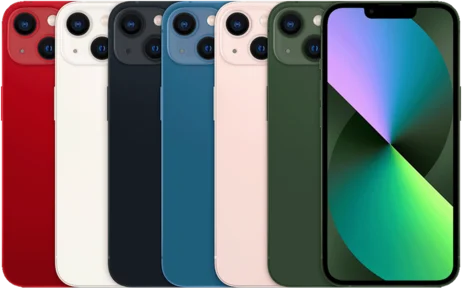
Model at a glance
| Screen | 6.1-inch OLED |
|---|---|
| Unlocking | Face ID |
| Storage options | 128, 256 or 512 GB |
| Cameras | Wide and Ultra Wide rear cameras |
Apple’s technical specifications
Before accepting this model
Check that the offer names the standard iPhone 13. The mini, Pro and Pro Max have different screen sizes or camera systems. Test Face ID and both rear cameras, check for display damage and ask about battery condition.
Bring an iPhone 13 to a new provider
Open Settings, General, then About. Check the carrier-lock entry and give the IMEI only to the carrier through its official compatibility checker. An unlocked handset still needs the company’s approval for its network. If you use a physical SIM, confirm that the exact regional model and your provider support your preferred setup.
Compare the smaller iPhone SE.
Will it work with your provider?
Ask the carrier to check the specific handset’s IMEI through its official compatibility tool before you transfer a number. An unlocked device still needs to support the carrier’s network. Confirm whether the company will issue a physical SIM or activate an eSIM and whether either option has an upfront fee. Keep your old line active while a number transfer is pending.
Get the offer in writing
Request the exact model and storage capacity, condition, amount due at checkout, shipping, return window and warranty. For an advertised zero-dollar handset, ask whether a new line or transfer is required. A Lifeline approval applies to service. It does not reserve this model or establish a device price.
Compare iPhone offers or compare provider charges.
Check a refurbished iPhone 13 at pickup
Try Face ID setup with the seller’s permission after the phone has been erased and released by its previous owner. Test the rear cameras at both available lens settings, record and play back a short clip, and check that the charging cable seats securely. Ask which faults are covered and who pays return shipping. A carrier’s network compatibility check and a hardware inspection answer different questions.
Check 5G service at your address.
Eligibility, documents and application steps
For a Lifeline phone plan, check whether someone in your household participates in SNAP, Medicaid or another qualifying program, or meets the income limit. Prepare current proof if verification is requested. After approval, ask the carrier to confirm the model, SIM, any one-time charge and monthly plan in writing.
- Check Lifeline eligibility if you also need monthly service.
- Use the document checklist for Lifeline proof requests. Separate equipment programs issue their own instructions.
- Choose your application route and keep the confirmation number.
Compare compatible phone models
For a mobile line, compare the handset size, activation method and charging connector. Ask the carrier to check the exact model before you transfer your number.